Malpractice 101
A malpractice case exposed deeper cracks in Aruba’s healthcare system. These are not isolated incidents but signs of structural neglect, fear, and eroding trust.
Originally published October 2025
A reflection on patient safety and silence
This article was written in late October 2025 during a period of intense public discussion about patient safety, transparency, and accountability in Aruba’s healthcare system.
It is lightly adapted and republished here for archival purposes and continued reflection. The themes remain relevant as the conversation around trust, governance, and humane care continues.
Recent incidents in healthcare
In recent weeks, yet another malpractice case has shaken our island. A gentleman, Mr. Albert Vrolijk, popularly known in Aruba as DJ101, sought medical care, but was left in confusion — never fully told what he had, why certain tests weren’t performed, or what his diagnosis truly meant. He had to go to Colombia and just in time — 48 hours later, and he probably would have lost his life because of a massive infection that was not detected in Aruba.
In another tragic case where our Local National poet, Ms. Ruthy Vrieswijk-Bergen courageously spoke out about her experience with malpractice in Aruba. The physician of her elderly mother never saw her mother, not even once to explain the situation — and that patient later died.
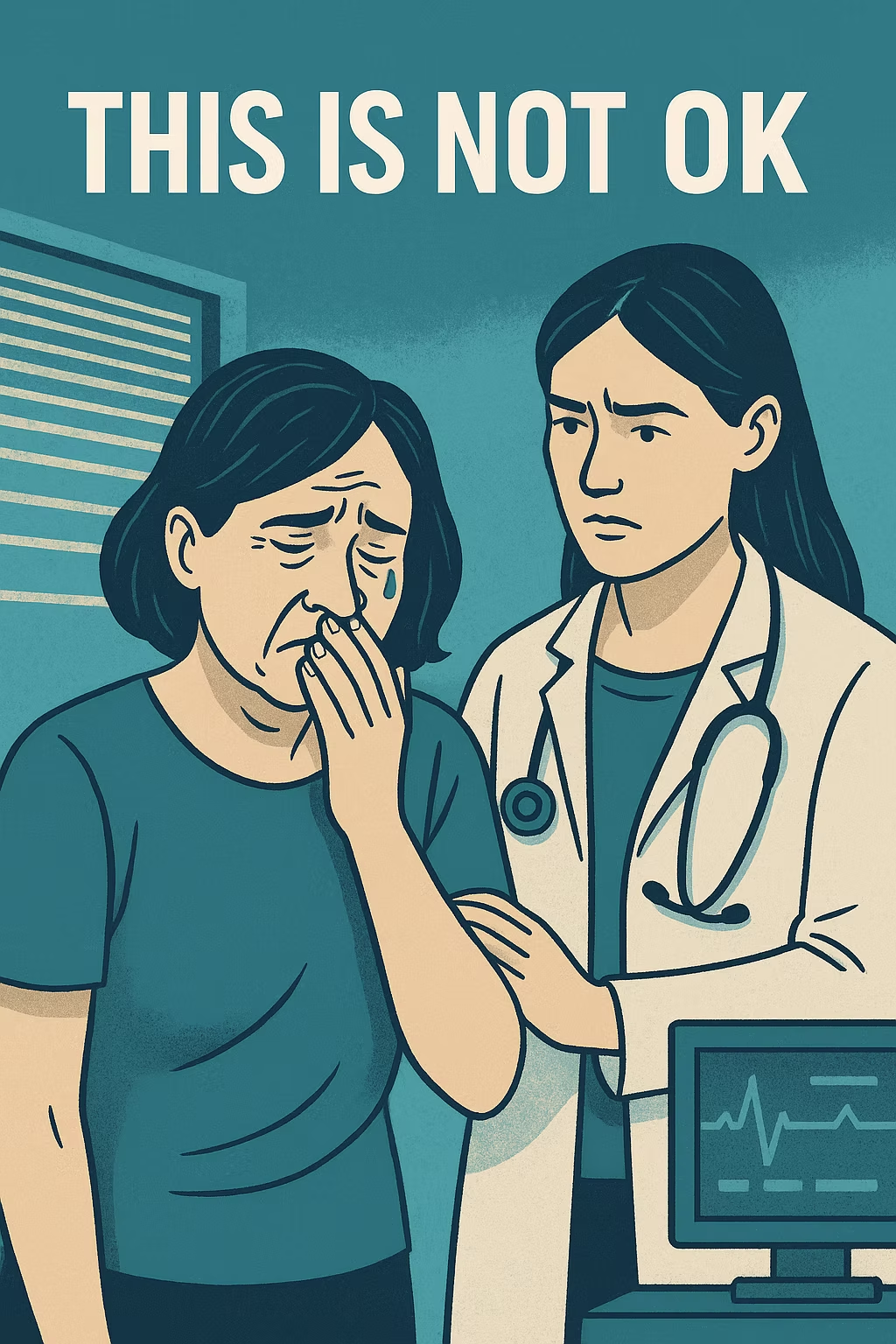
This is not OK
Let’s be clear: this is not OK. These are not isolated stories. We see structural neglect, discrimination and violation of patients’ rights.
Aruba has witnessed how I made a public denouncement a few weeks ago that corruption has our healthcare on its knees. I made a public request for transparency and called out that our nation deserves transparency.
Remarkably I have yet to receive an answer from the Minister Mervin Wyatt-Ras. Instead she chose to attack me personally in the media, sent me letters that I am not welcome at her office and Department of Public Health, and started a campaign for “upcoming projects for the elderly”.
Suddenly all focus is on the elderly?
Even the Director of the HOH claimed enough with words, let’s help the elderly now!
Why? Allegedly HOH is concerned and raises the alarm. But remember, this was just a few days after the news that appeared on NOS news in the Netherlands, where they revealed that the situation of the elderly, especially in nursing homes, is shockingly horrible and inhumane. HOH forgets that, more often than not, negligence and malpractice of elderly patients happen in the HOH.
Even IVA started to speak up that they are doing what they can for the elderly, all of a sudden.
The Cartel and damage control
And to complete the CARTEL FAMILY, Mr. Tico Croes praised AZV as a huge POLITICAL LEGACY we should all cherish and to protect it; only adapt what is necessary. Looks like the cartel is preparing to make its move.
A last ditch at DAMAGE CONTROL was the fact that HOH delivered to the minister the financial reports of the hospital over the last DECADES, because Aruba deserves transparency!
I will give Caesar what is Caesar's, it is to be applauded that HOH FINALLY is giving account on where the PUBLIC FUNDS are going. However, the question arises: why all of a sudden? Why not all these years has this been normal to publish Financial year reports?
Look at the fruits, and the roots
All of this reveals the result of the Cartel family not caring about anyone else. It shows a pattern that is obviously taking root, especially among our elderly.
Cases like these are becoming remarkably common in Aruba — a slow, painful erosion of dignity and trust in our healthcare system. This is discrimination of elderly, and of patients because they are patients. The sad part: each one of these cases could have been prevented.
Beyond Individual Fault — A Systemic Crisis
When patients are dismissed, left uninformed, or treated as numbers in a process, the damage extends beyond a single person or family. It seeps into the culture of care itself — replacing compassion with apathy, and professionalism with fear.
This is not just a healthcare issue. It is a moral crisis.
It is a systemic failure that connects healthcare, government, and oversight. And it thrives in silence. Our families are afraid of healthcare, our people distrust our institutions. And this anger and hurt is growing by the day.
Silence Feeds Corruption — Transparency Heals
Every time we look away or remain silent, we allow a culture of impunity to grow. Silence feeds corruption — in healthcare, in policy, and in leadership.
But this spiral can be reversed.The first step is to speak up — safely, clearly, and together.
Soon you will be able to share your experience completely anonymously on the platform of patients. Because every story helps us identify trends, document failures, and push for real reform — not empty promises, not “bla bla bla,” but real change based on real people with real pain.
From Testimony to Transformation
The Platform Pashentnan di Aruba (PDA) already holds a seat at the table of the Kwaliteitsraad, the National Quality Council that helps shape healthcare policy and standards. Through this platform, we will continue to advocate for the rights and safety of patients — and for a healthcare system built on transparency, accountability, and compassion.
You Are Not Alone
If you or a loved one need help understanding your rights, filing a complaint, or navigating a difficult healthcare situation, consider filing a complaint at the committee of complaints where you had healthcare. It’s completely free, and every complaint helps to make the system better.
You can also be proactive and find out about what are your rights as a patient. Because if you do not know your rights, it is as if you have none.
And when we stay silent, we surrender them to those who misuse power.
Let’s break the chains of silence — for a healthcare system that protects, not neglects. For a better tomorrow for all.
Now What?
If this helped you understand malpractice more clearly, the next step is to pause and become more aware. Next time when you need healthcare, pay attention to what they explain, what they document, and where things remain unclear. Ask questions. Request your medical file. Put concerns in writing when needed. These small actions already shift you from uncertainty to clarity.
If you want to go deeper into how to do this in a structured and practical way—how to understand your rights, recognize situations, and act with confidence—I’ve brought this together in my book E derechonan di pashent. It is written as a guide, not just to inform you, but to help you navigate real situations with clarity and direction.
Jayburtt J. Dijkhoff, PhD
Expert in Health law, Quality of Care, and Social reflexion
If you want to know your rights, you can get your copy of "E derechonan di pashent" (in Papiamento) at Plaza bookshop or order your copy here.